January, 2026
In urban areas, noise levels can make or break a horizontal directional drilling (HDD) project. Excessive noise from the rig can lead to neighbor complaints, inspections, and operator fatigue, ultimately slowing production. By reducing noise at the source, quieter, compact machines also minimize the job-site footprint, allowing crews to complete bores with fewer interruptions and less hassle.
If you're looking for a rig that excels in these environments, look no further. Learn about the quietest HDD machines for urban neighborhoods and find the right fit for your next project.
Several factors contribute to the noise level of a horizontal directional drill (HDD) on a job site. Understanding these factors can help you select the right machine for noise-sensitive environments.
This sets the baseline for machine noise. Manufacturers publish a “guaranteed” sound power level in dB(A), which describes the total acoustic energy a machine emits. Lower numbers reduce the noise footprint around the rig—something neighbors and inspectors will notice.
The operator's ear-level measure shows how loud the machine actually feels to the operator. Low ear-level dB(A) levels reduce fatigue and help operators communicate without shouting. A rig might emit more total sound yet keep the operator's station quieter through cab insulation and isolation mounts.
The size of the machine generally affects how loud it is. Small rigs usually run smaller engines and shorter rod boxes, a combination that trims sound at idle and during makeup/breakout. Additionally, a compact frame fits into tight spaces like alleys, pocket parks, and lane closures without spilling into live traffic. This allows crews to work safely and efficiently in crowded urban environments.
The design of the engine and its isolation system contributes to a large portion of the machine’s perceived noise. Modern engines with proper enclosures, tuned intake/exhaust systems, and rubber isolation mounts reduce vibration and harshness. Keeping mounts clean, seals intact, and mufflers properly installed ensures the machine continues to operate quietly throughout its life.
The nature of the job alters the sound profile. Bore length, diameter, thrust/pullback forces, rotation speed, and rod size all change sound patterns. For example, drilling at high RPM in rock on a hot day with thick fluid at the shaker generates far more noise than a short, sandy pullback.
Choosing the quietest HDD machines for urban neighborhoods helps crews complete projects efficiently without disturbing residents or traffic. The options below balance compact size, low operator noise, and sufficient power to safely tackle city utility bores.
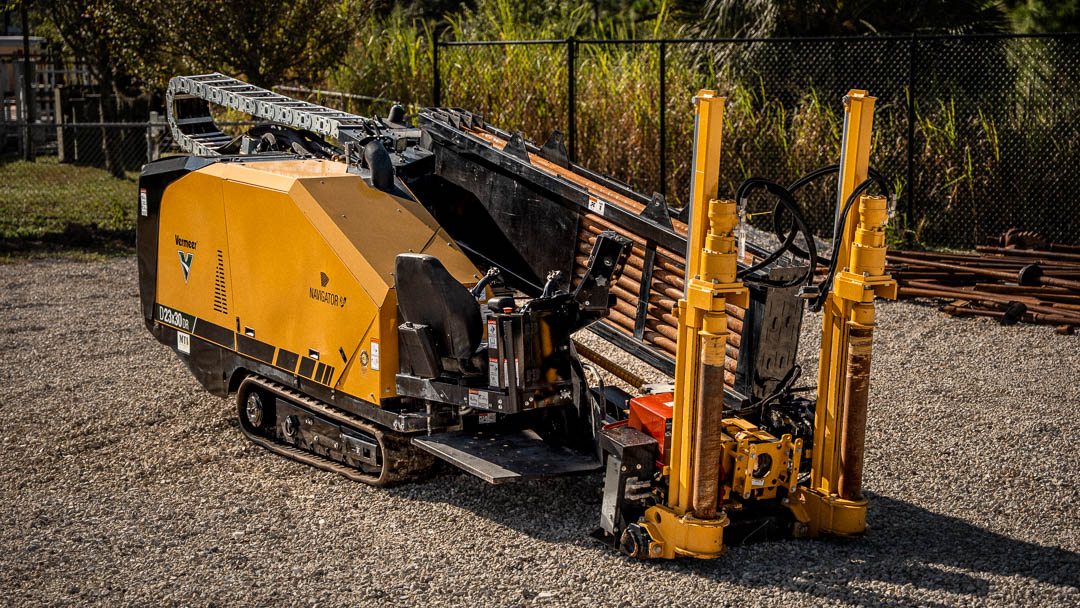
The Vermeer D23x30 S3 is a compact HDD rig designed for urban environments, offering 24,000 lb. thrust/pullback and 3,000 ft-lb. torque—enough for most service and small main bores in city soils. Noise performance sets it apart. With a guaranteed sound power level of ~99 dB(A) and an operator ear level of ~78.7 dB(A), it’s one of the quietest Vermeer rigs for dense neighborhoods.
Moreover, the Vermeer D23x30 S3’s short, nimble footprint allows crews to work on mid-length bores under busy streets, storefront sidewalks, and residential cul-de-sacs with minimal staging. Operators can communicate at normal voice levels, and crews move the rig in and out efficiently, reducing disruption. This balance of compact size, respectable power, and low operator noise makes it ideal for projects where minimizing neighborhood disturbance is your priority.
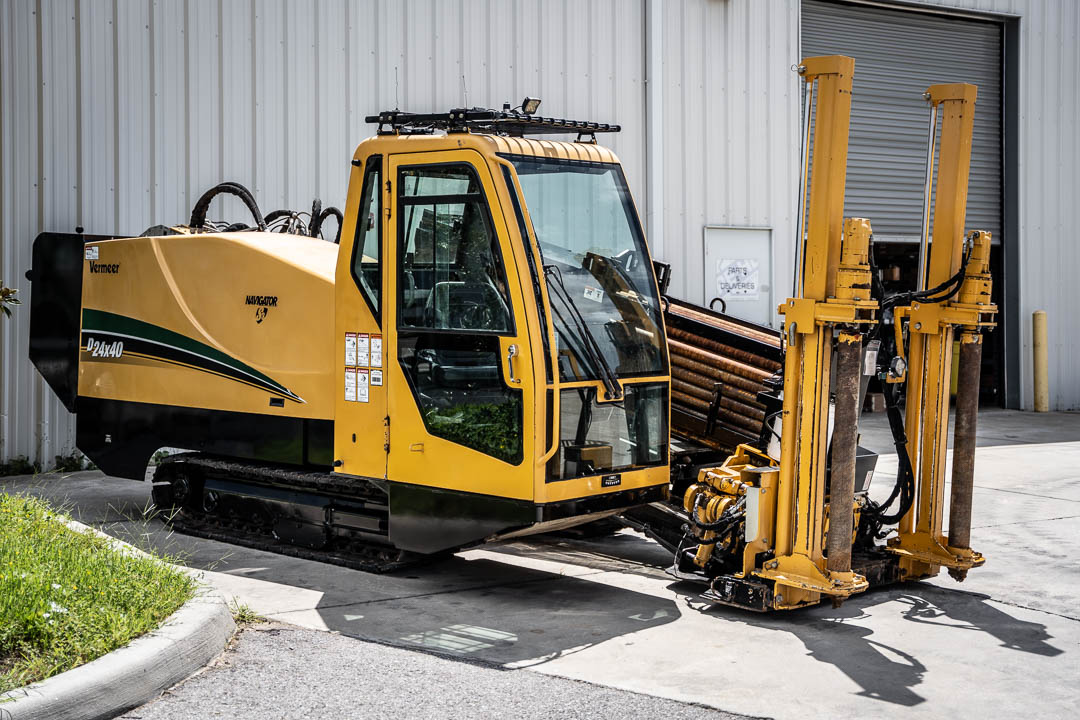
The Vermeer D23x30DR S3 adds rock capability in a compact frame, with its dual-rod design tackling cobble and shallow bedrock typical in older downtown utility corridors. Operator ear readings typically range from 80–83 dB(A), keeping cab conditions manageable even under harder drilling loads.
In urban rock bores, crews often face a choice between a short, noisy maxi rig or a compact unit that can fit tight corridors. The D23x30DR S3 bridges that gap, offering enough bite for municipal rock programs, downtown fiber laterals, and gas renewals while maintaining a small footprint. It’s a nimble solution that balances power, access, and operator comfort, allowing work in confined spaces with less disruption to traffic and pedestrians.
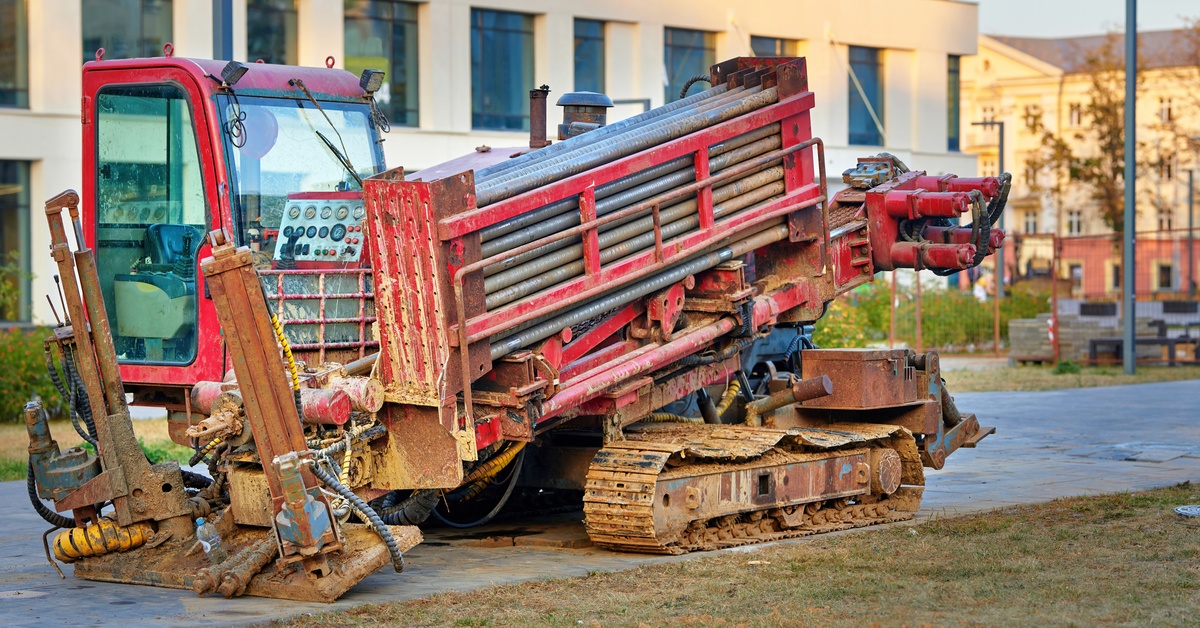
The Vermeer D550 is a large, maxi HDD rig that delivers class-leading torque for long, large-diameter bores crossing rail lines, rivers, and highways. While it generates more ambient noise than smaller drills, the operator cab remains surprisingly quiet, allowing crews to work long days with less fatigue.
Its size limits use on narrow streets, but the D550 handles major urban utility corridors while keeping the operator comfortable. Likewise, the D550 is best suited for projects requiring high-capacity, long-distance drilling, where strategic staging and careful traffic planning are essential.
The Vermeer D20x22 S3 is ideal for the tightest urban spaces, making it suitable for alleys, pocket parks, and historical districts with restricted access. Operator ear levels hover around 86.5 dB(A), higher than the D23x30 S3, though crews can manage perceived noise with staging, rubber mats, and well-maintained exhaust systems.
This HDD rig has a highly compact footprint, allowing you to work in areas where noise levels are less important than physical access, especially during daytime operations.
Pick a rig that meets noise limits and still hits your production targets. The following checklist helps you weigh the trade-offs.
Selecting the right HDD rig for urban work requires balancing noise levels, power requirements, and site access. The machines above represent proven solutions for noise-sensitive environments, but your specific project conditions—soil type, bore length, local ordinances—should guide your final decision.
MTI Equipment sells vacuum excavation units designed for urban job sites. Our experts understand how support equipment integrates with HDD operations and can guide you toward solutions that keep your entire crew productive while respecting community noise concerns. Contact us today to discuss equipment for your next project.
SHARE
Got a question? Our support team will go the extra mile so you can have an easy and enjoyable experience with MTI.
Contact Us© 2026, MTI Equipment - All Rights Reserved.