February, 2026
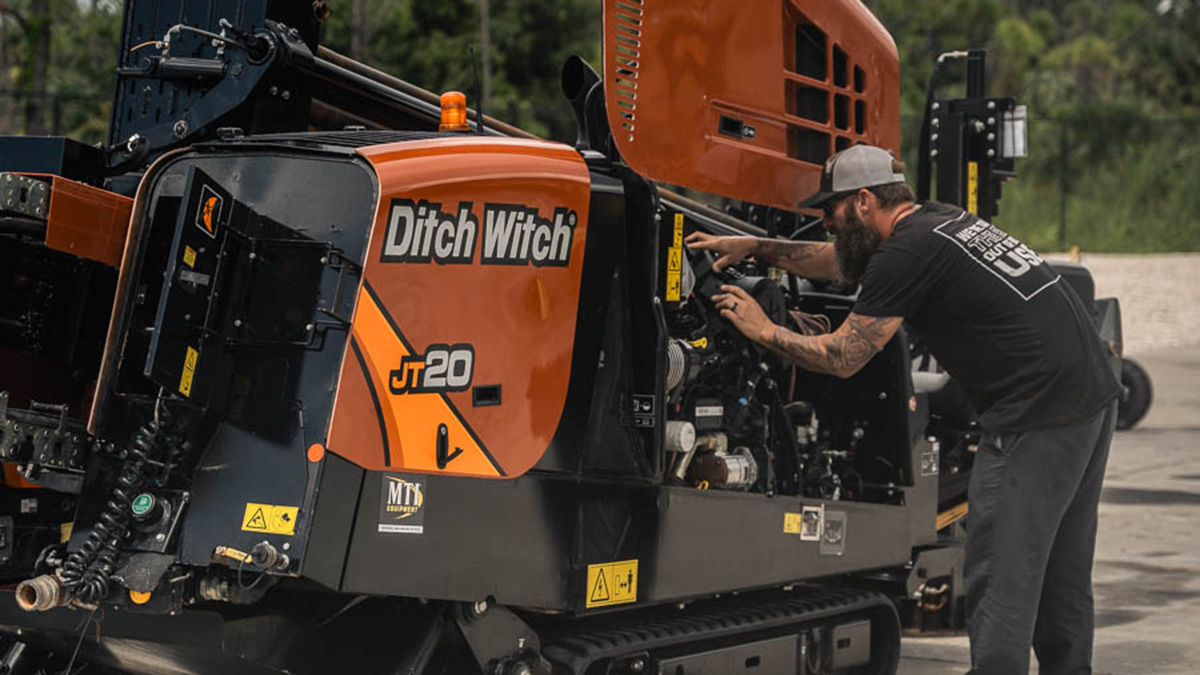
Pre-owned horizontal directional drilling (HDD) and excavation machines can deliver strong value when their mechanicals, hydraulics, and structure are in good condition. Conducting a thorough evaluation helps prevent surprise repairs, forecast maintenance costs, and protect operators on the job. Many teams rely on pre-purchase inspections for HDD and excavation equipment as the final step before committing capital to ensure they buy the right machine.
Start with a walkaround under good lighting, with the machine clean. Inspect the machine’s frame and subframe for cracks, bends, rust pitting, or fresh paint that masks repairs. Additionally, look closely at welds on the main frame, boom mounts, and high-stress corners for undercut, porosity, or inconsistent beads that suggest rushed repairs.
Move on to the boom, stick, and any structural attachment points. Measure the pin and bushing play with a pry bar and observe joint movement during a slow cycle. Notice any excessive slop, oval pin bores, or hammered bucket ears, as these indicate accelerated wear and higher rebuild costs down the line.
Hydraulics drive productivity on both HDD rigs and excavators, so inspect them carefully. Examine hoses for weather checking, abrasion, and swelling near crimp collars, and check cylinder rods for chrome flaking, pitting, or scoring. Cycle the rods under load to test the wiper seals and watch for seepage at full extension.
You should also sample the hydraulic fluid and assess its color and odor, since dark, burnt, or milky fluid can indicate heat stress, oxidation, or water contamination. During a functional test, run every circuit under load and pay attention to smoothness, speed, and system noises; pump whine, cavitation, or erratic response often point to suction issues, air ingress, or internal wear.
A healthy engine anchors the investment, so begin by checking engine oil and coolant for froth, sludge, or cross-contamination. Next, inspect belts, tensioners, air filters, and fuel filters for wear or damage. Then start the machine cold and let it warm up. Listen for irregular idle, hunting RPM, black smoke under light load, or persistent white smoke, all of which deserve attention.
Test the transmission and final drives with forward and reverse cycles on grade if possible. Listen for grinding, feel for slipping, and scan for leaks at the transmission case, axle seals, and final drive housings. Strong tractive effort, clean shifts, and a predictable response under load support a solid verdict on the drivetrain.

Undercarriage wear consumes budgets if you miss it. On tracked excavators, check sprocket teeth for hooking, rollers for flat spots, idlers for looseness, and shoes for cracked pads or missing hardware. Track chains with dry, tight joints, inconsistent pitch, or severe rail wear will require attention sooner rather than later.
On tracked excavators and HDD rigs, inspect the tracks, rollers, sprockets, and idlers for wear or damage. Check for loose or worn track links, flat spots on rollers, and any cracked or missing shoes. Uneven wear or damaged components often indicate alignment, tension, or undercarriage issues that can lead to costly repairs
Electronics drive diagnostics and safety, so test them thoroughly. Turn on the master, check the control panel, and verify every gauge, light, and switch in sequence. Operate joysticks and pedals with fine movements and confirm a linear response. Jumpy inputs or dead zones make precision work harder and frustrate operators.
Open accessible electrical enclosures and scan for chafed harnesses, corroded connections, or nonstandard splices. If the machine offers a fault log, review recorded codes and note recent alarms. Then check that the battery terminals are clean, that grounds are solid, and that the charging system maintains a stable voltage under load to ensure reliable up time.
Attachments reveal how the machine has been used and maintained. On excavators, inspect buckets, quick couplers, thumbs, and coupler locks for cracks, distortions, or pin wear. When evaluating the machine, verify that couplers lock and release smoothly and that safety latches function reliably.
As you evaluate the directional drilling machine, it’s best to examine drill heads, housings, and swivels for cracks, bent components, or play at connections. Check pins and bushings on reamers and confirm that threads on rods and subs remain sharp and undamaged. A quick spin test can uncover bent tooling that affects tracking accuracy, giving insight into the machine’s real-world performance.
Cycle the machine through a full range of motion, including booms, sticks, buckets, and any auxiliary circuits at low and high RPM. Watch for hydraulic hesitation, unusual noises, or harsh impacts at the end of each stroke. On HDD machines, test rotation and thrust-pullback through the band, monitoring pressure indicators, and listening for pump or valve chatter.
Focus on feel, not just function. Do the joysticks respond predictably to small inputs? Does the machine maintain balance and hold grade during slewing or when the boom is fully extended? A brief trenching, digging, or mock drilling sequence reveals far more about performance than a static yard test ever could.
Look for patterns, not isolated entries. Repeated repairs on the same circuit may indicate unresolved issues, and long gaps in service records raise questions about maintenance. If the inspection is positive, compare the machine's models and capacities to your directional drilling machine to ensure it fits the job mix, ground conditions, and crew experience.
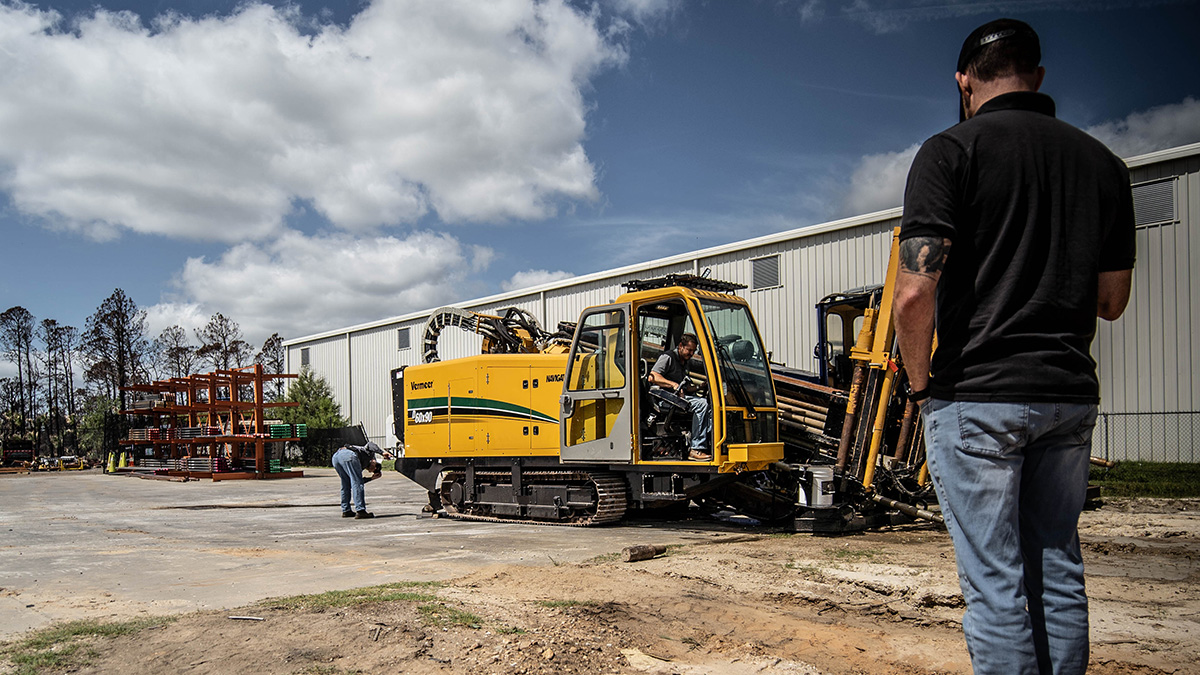
Another important reason to conduct pre-purchase inspections for HDD and excavation equipment is to verify safety and compliance. Test emergency stops, alarms, backup alerts, seat belts, and interlocks under live conditions. Verify that decals, guards, and shields are present and legible, and verify that the machine meets local regulatory and jobsite requirements.
To ensure the machine meets operational and regulatory standards, inspect all safety and compliance features thoroughly, including the following items:
Document structural, hydraulic, engine, undercarriage, electrical, tooling, and safety findings with photos. Use these notes to compare repair or replacement costs and make a confident purchase decision.
Browse MTI Equipment’s selection of certified pre-owned horizontal directional drills made by trusted brands like Vermeer, Ditch Witch, and American Augers. Contractors can navigate obstacles, protect infrastructure, and complete projects efficiently. Our team provides expert guidance to match equipment to job requirements, helping ensure confidence and precision on every project with the right directional drill.
SHARE
Got a question? Our support team will go the extra mile so you can have an easy and enjoyable experience with MTI.
Contact Us© 2026, MTI Equipment - All Rights Reserved.